Inflation is a general rise in prices across many goods and services, so the same money buys less. To explain inflation to a child, compare the same basket on two dates; one price change alone doesn’t show what’s happening across the economy.
What is inflation? The same money, fewer things
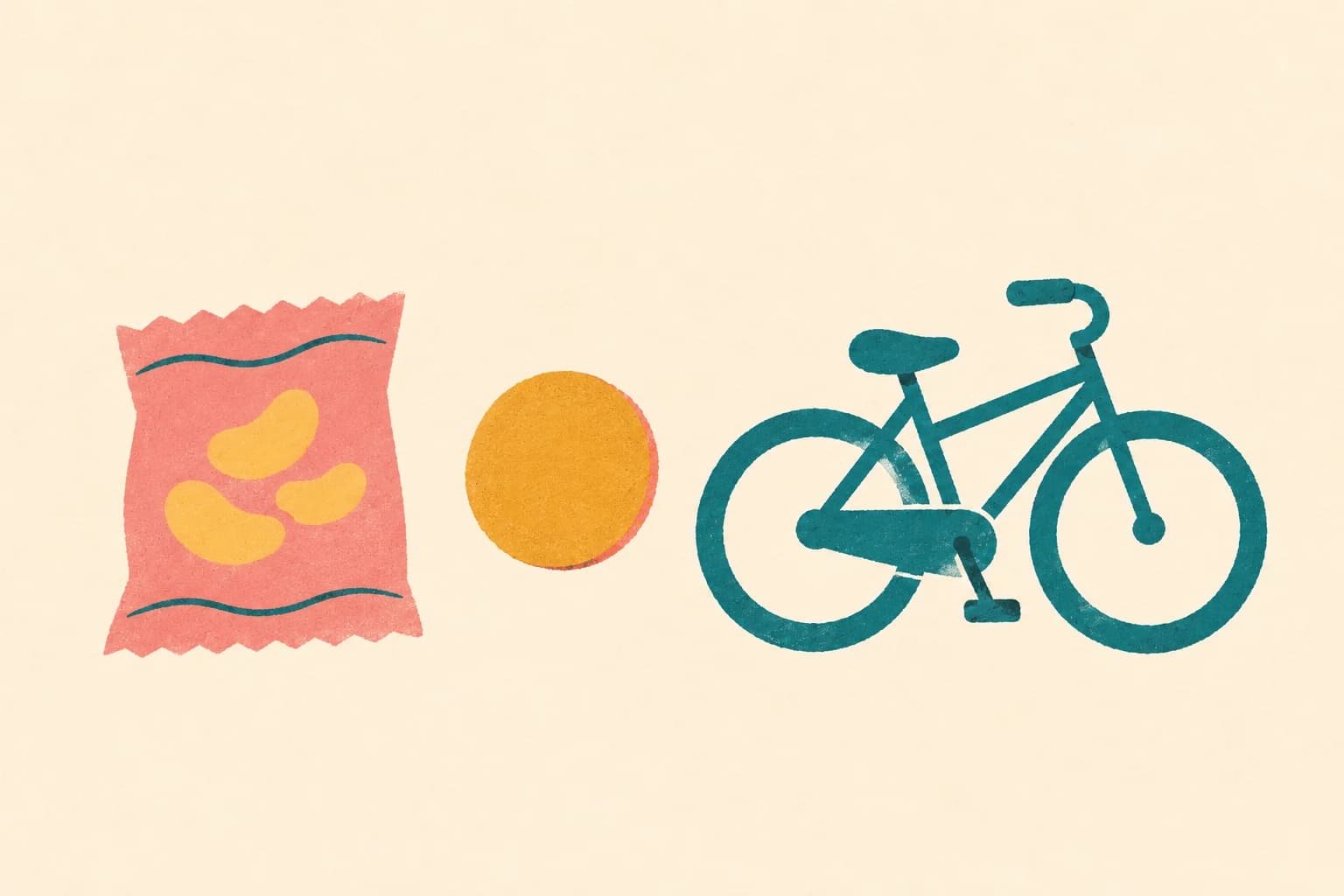
A child may notice the change before knowing the word: “Last time my money was enough, today it isn’t.” You can explain inflation to a child like this: “When prices go up in general, the same amount buys less. We call that inflation.”
The European Central Bank describes inflation as a broad rise in prices, not a change in just one product. For a child, the difference is this: if their favorite pencil gets more expensive, we’ve noticed the price of one pencil. To talk about inflation, we have to look at many goods and services together.
Build a pretend basket
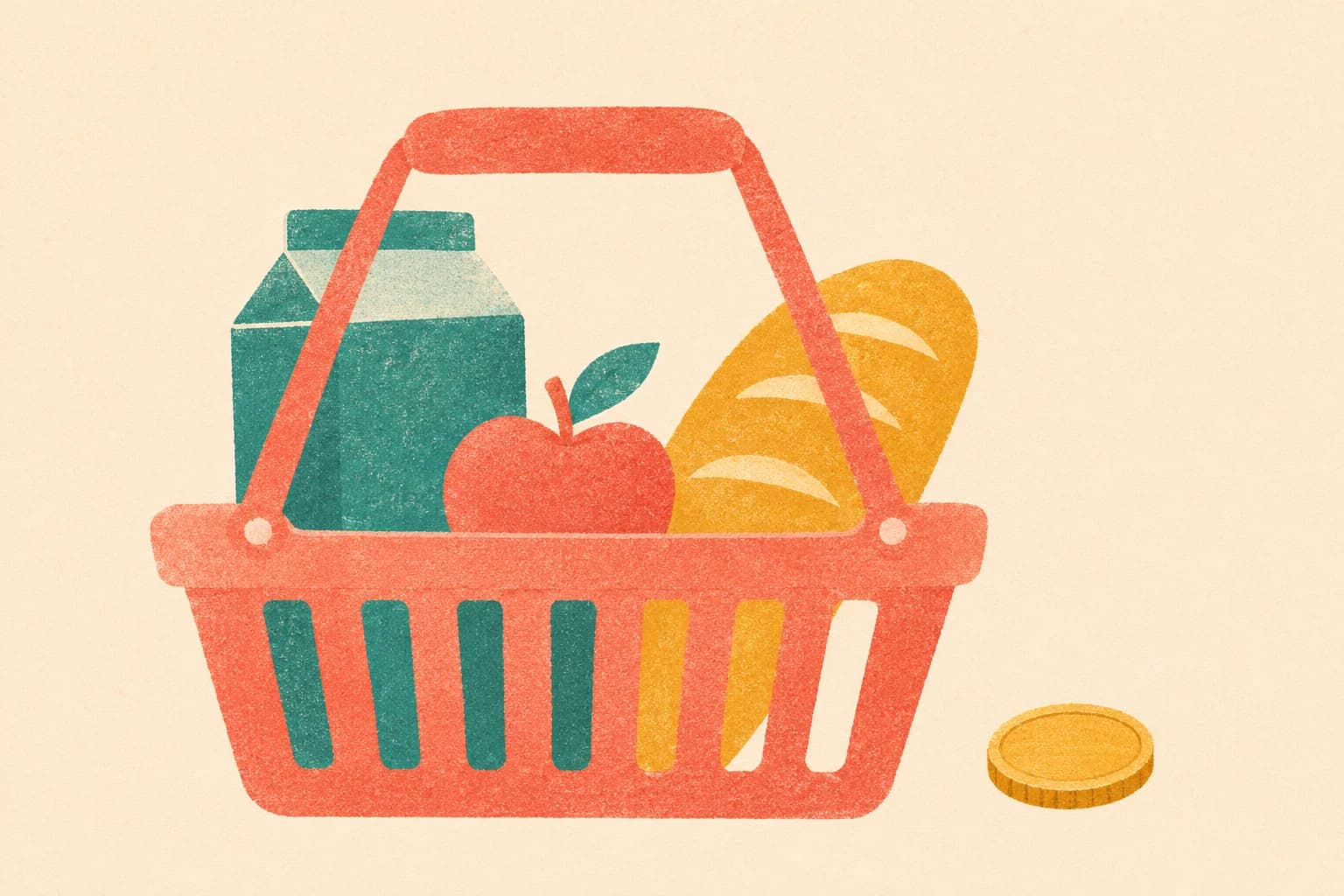
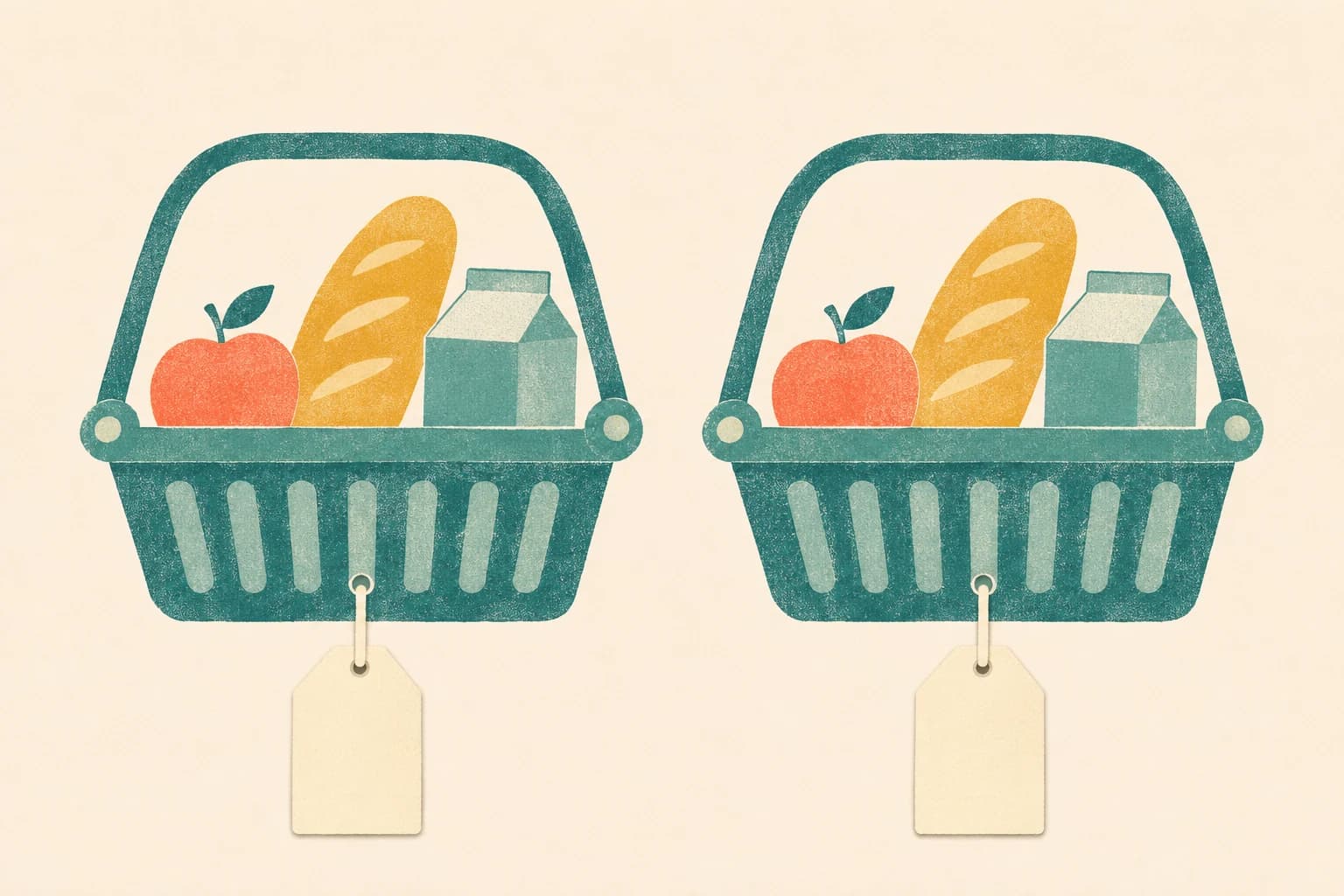
Draw bread, milk, and apples. For the game, give them prices of 100, 150, and 150 lek: 400 lek in total. In the second round, use 110, 165, and 165 lek: 440 lek in total. These are made-up prices for the activity, not current prices in Albania.
Ask your child what happens to a budget of 400 lek. It’s now 40 lek short for the same basket. For a child who knows percentages: 40 divided by 400 is 10%. That’s the increase in our pretend basket, not the country’s inflation rate.
Keep the quantities the same. A kilogram of apples can’t be compared directly with a half-kilogram bag. If the package size changes, check the price per kilogram or per liter. That way, your child also learns to compare carefully.
Why lower inflation doesn’t mean lower prices
Imagine a pretend basket that costs 100 lek. If it goes up by 10%, it costs 110 lek. In the next period, a 5% rise takes it to 115.50 lek. The pace slowed down, but the basket still got more expensive.
With younger children, say it without percentages: “The price is climbing more slowly, but it’s still climbing.” Don’t load them with terms while they’re still learning addition; two prices written on a sheet are enough to start. Also, a store sale can lower one product’s price even while many other prices go up. Keep the conversation to what you observe, and don’t draw big conclusions from a single receipt.
What your family can do
Offer your child two or three sensible choices: compare the same product in two stores, use what’s already at home, or put off a purchase that isn’t urgent. Don’t make your child responsible for fixing the adults’ budget.
If the price of a savings goal changes, update the plan together. In a made-up example, a book planned at 800 lek now costs 900. The 100 lek difference may mean saving for longer or making a different choice. It doesn’t make the effort so far worthless.
Avoid saying “saving isn’t worth it anymore.” Money set aside still helps with goals and unexpected expenses. Explaining inflation shouldn’t turn into pressure to buy right away or to take risks.
A four-week observation sheet
Choose a product you buy regularly and write down the date, quantity, and price once a week. At the end, see whether it changed. If it didn’t, that’s just as much a result as an increase. Don’t go looking for a dramatic story.
At the top of the sheet, write: “This is our experience with one product.” Understanding the national figure takes much broader data. The Bank of Albania’s educational booklet can help you continue the conversation in Albanian.
The closing question is simple: “What do we need to check before saying something has gotten more expensive?” The answer to listen for: the same product, the same quantity, and the price on two clear dates.
Common questions
Is every price increase inflation?
No. Inflation describes the general change in prices. A single product can get more expensive for its own reasons.
Should we automatically raise allowance?
Not necessarily. Look at what the amount covers and what your family can afford. Basic needs remain the adults’ responsibility.