Compound interest means earning interest on both the starting amount and the interest already added. For example, 2,000 lek at a made-up rate of 10% a year becomes 2,200, then 2,420, then 2,662 lek, versus 2,600 lek with simple interest. The rate is for teaching only.
First: what is interest?
To explain compound interest to kids, start with the basics: in an account that pays interest, the bank adds money according to the account’s terms. The money you put in at the start is called the principal. Interest is what gets added, and the interest rate shows how it’s calculated for a set period.
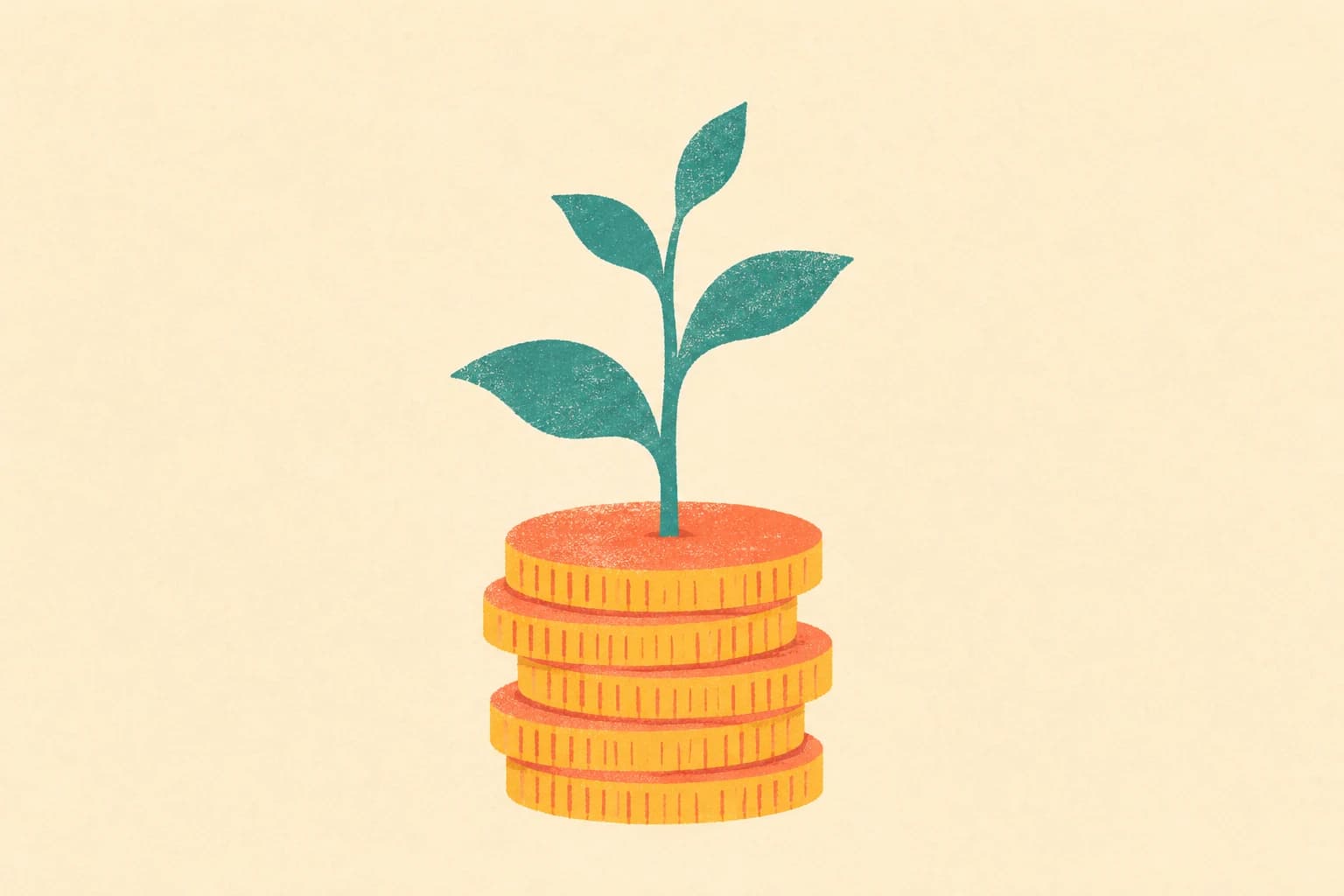
When interest stays in the account and starts earning interest itself, that’s compound interest. This is also how the US Consumer Financial Protection Bureau (CFPB) defines it. Compounding isn’t a way to get rich quickly, and it doesn’t happen automatically wherever money is kept.
Our example: 2,000 lek and a made-up rate
Assume 2,000 lek, an annual interest rate of 10%, and interest added once a year. We don’t add more money or take any out. To keep the math simple, we leave out fees and taxes. The 10% rate was chosen for the math only; it is not a bank offer or a promised return.
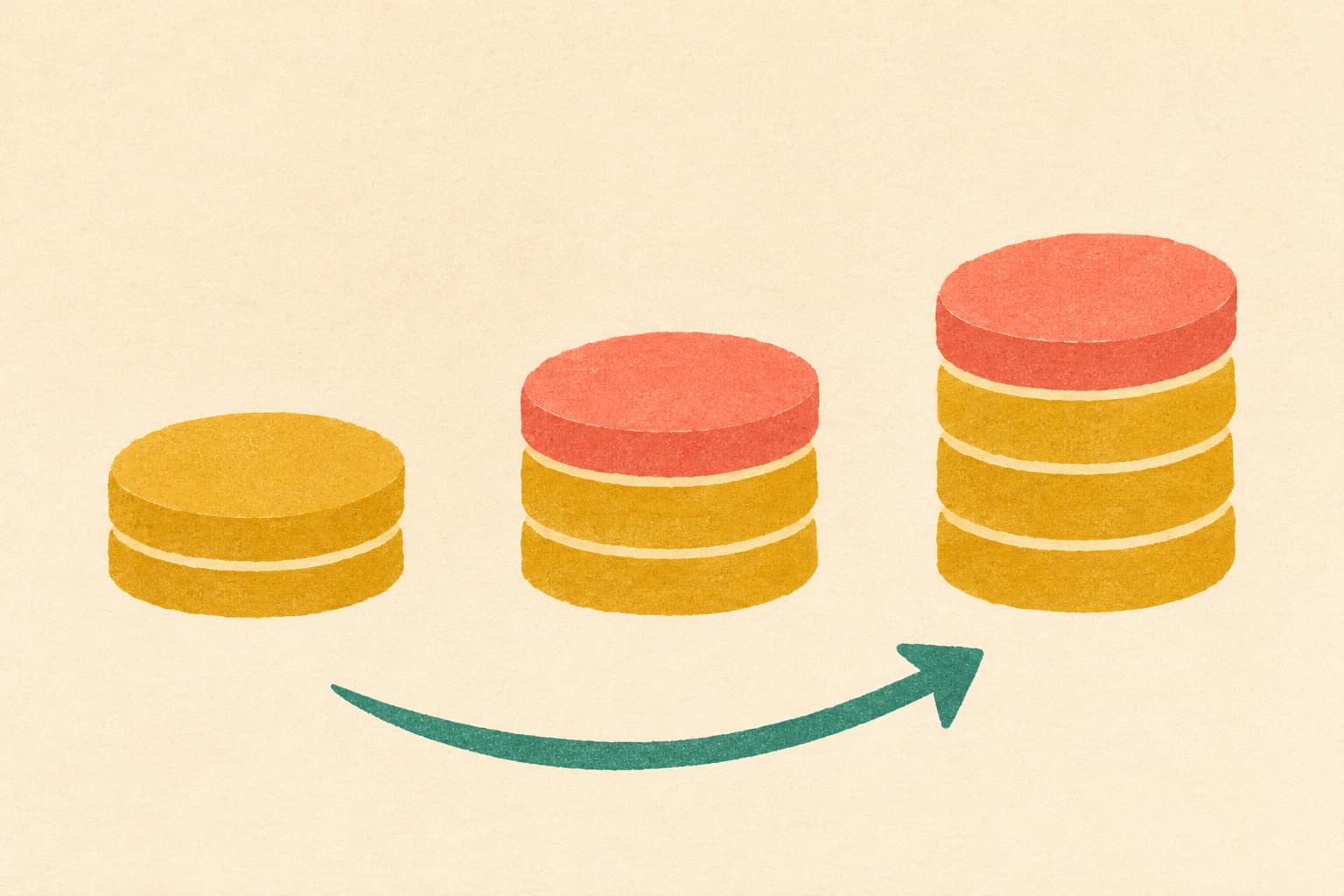
After year one: 10% of 2,000 is 200, so the total becomes 2,200 lek. After year two: 10% of 2,200 is 220, and the total becomes 2,420 lek. After year three: 10% of 2,420 is 242, and the total becomes 2,662 lek.
Ask your child why the second year adds 220 and not 200. Because this time we’re calculating on a bigger amount. If percentages are still hard, stop at the main idea: the first addition stays in and becomes part of the next calculation.
How is compound interest different from simple interest?
With simple interest on the same 2,000 lek at the same made-up rate, the addition would be 200 lek every year. After three years, you’d have 2,600 lek. With compounding, you have 2,662 lek: 62 lek more.
Make two columns on paper. In the first, write 2,200, 2,400, 2,600. In the second, 2,200, 2,420, 2,662. Your child can see there’s no difference in the first year, but after that, the amount the interest is calculated on changes.
Don’t mix up interest with money the family adds. If you also put in 100 lek every month, the balance grows for two reasons. Write them down separately so your child doesn’t think every increase comes from the bank.
What changes with a real account?
For a real account, check the rate, the period it applies to, and when interest is added. Fees, taxes, rate changes, and withdrawal conditions can all change the result. Don’t use the game’s numbers as a forecast for your family’s savings.
Before choosing an account, ask for a written example using the amount you plan to deposit. Ask how much would be left after costs and what happens if you need the money sooner. A high rate in an ad doesn’t replace that conversation.
For your child, one message is enough: “First we understand the rules, then we decide.” A savings account and a risky investment are not the same thing.
A paper trial, without real money
Give your child ten paper squares. Call each round a year and add a note for that round’s interest, using the numbers from the example above. Don’t promise to pay the game’s rate with real money, especially if it would become unaffordable.
For an older child, change just one condition: for example, the made-up rate from 10% to 5%. Keep the amount and the time period the same. That way, they see what effect each condition has without getting lost in several changes at once.
Finish with three questions: What amount is the interest calculated on? How often is it added? Which costs did we leave out? If your child can explain these in their own words, they’ve understood more than if they only remembered the final total.
Common questions
Does money in a jar earn interest?
No. Interest requires an agreement or a product that pays it. A jar helps organize savings, but it doesn’t make the amount grow by itself.
Is 10% a rate we can get at a bank?
This article doesn’t claim that. It’s a made-up rate to keep the math easy. Check the bank’s current offer and terms.