To teach kids to save money, start with a wish your child chooses, an affordable amount, and a short weekly check-in. Give more independence when your child is ready, not just because they’ve reached a certain age.
When the question is: “Can we buy it today?”
Your child sees something they love. You see the price, and how far away the end of the month still is. That’s exactly where you can start teaching your child to save money, with a useful conversation: “How much does it cost? How much do we have? What can we do to get there?” You don’t need an economics lesson. You need a concrete wish and a little time to work toward it together.
This article uses three age groups to help you choose an activity. They aren’t developmental tests. One child may count well and still find waiting hard. Another may understand pictures more easily than numbers. Match the next step to what your child can do today.
Ages 5-7: a goal they can see
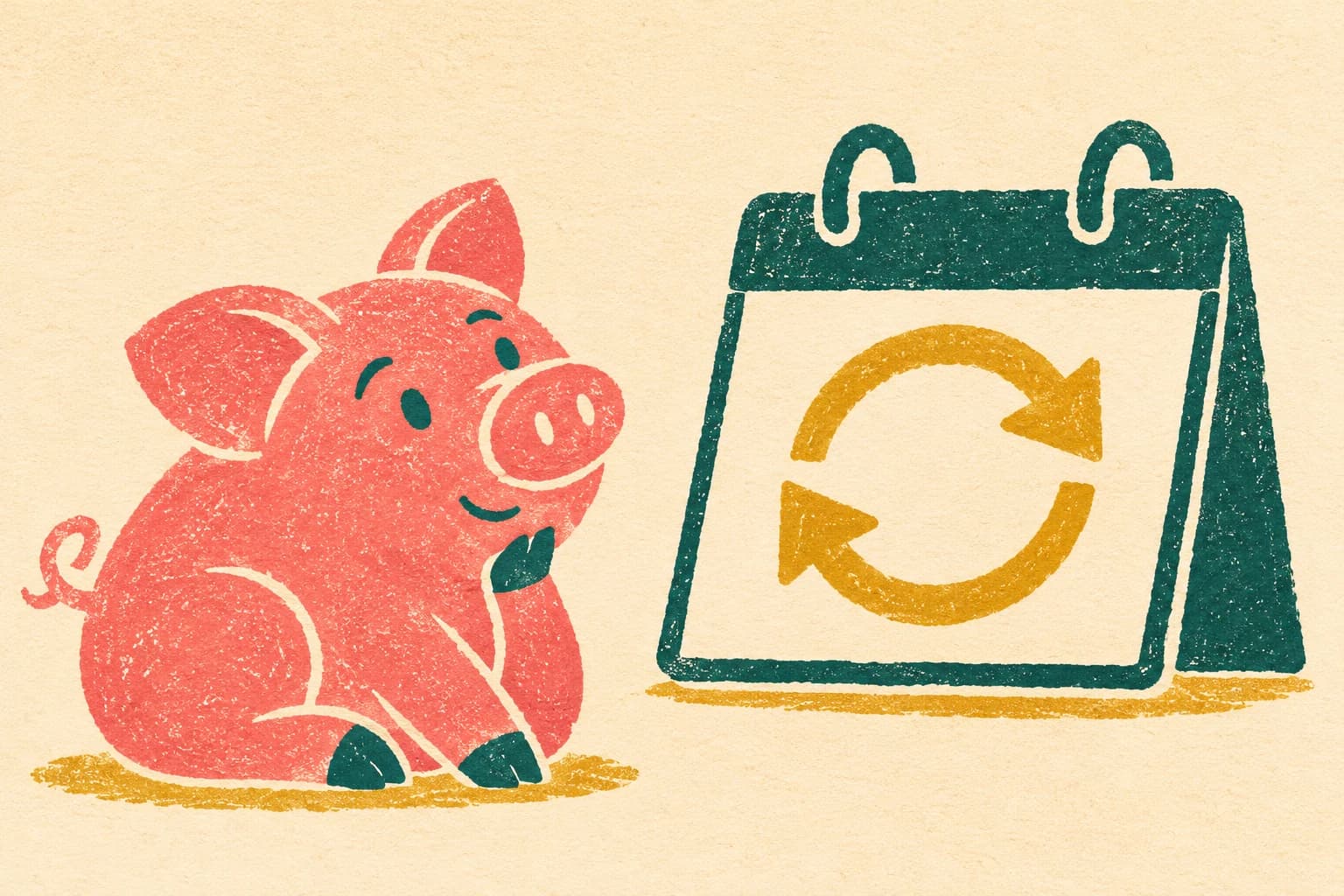
Choose a small wish together. Put a drawing of it next to a safe box or jar. Every time you add money, count it together and color in part of the drawing. If coins aren’t suitable for your child yet, use large paper tokens and keep the real money yourself.
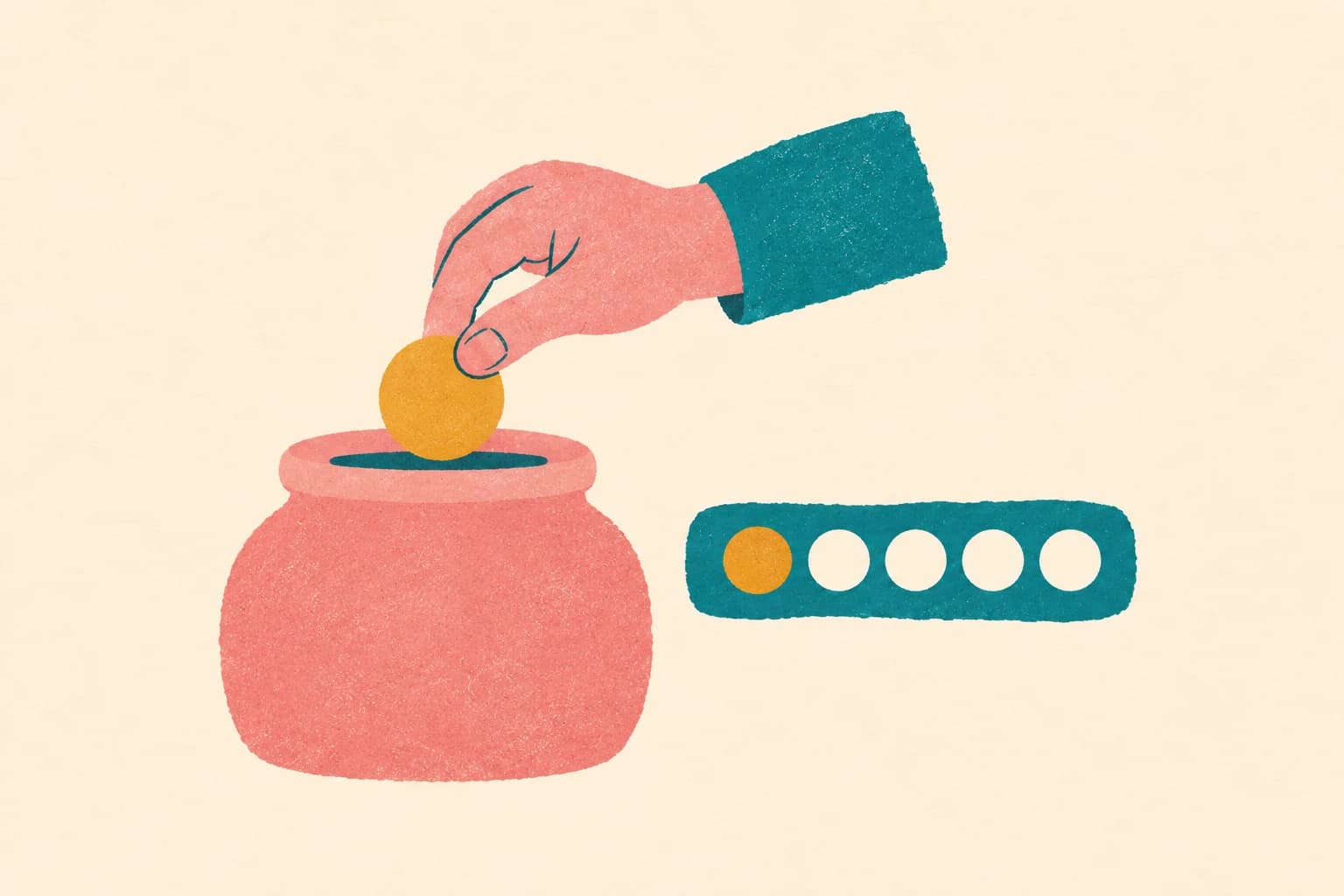
Here’s an invented exercise, not a suggestion for how much to give: the wish costs 400 lek, your child has 100 lek and can set aside 100 lek a week. They’re 300 lek short, so it takes three weeks. Draw three circles and fill one in each week. If your family can spare less, choose a smaller goal or an activity that costs nothing.
The explanation can be this short: “Today we got one step closer.” Ask your child whether they still want the same thing. Changing their mind is part of learning, not a failure of the plan.
Ages 8-10: compare two paths
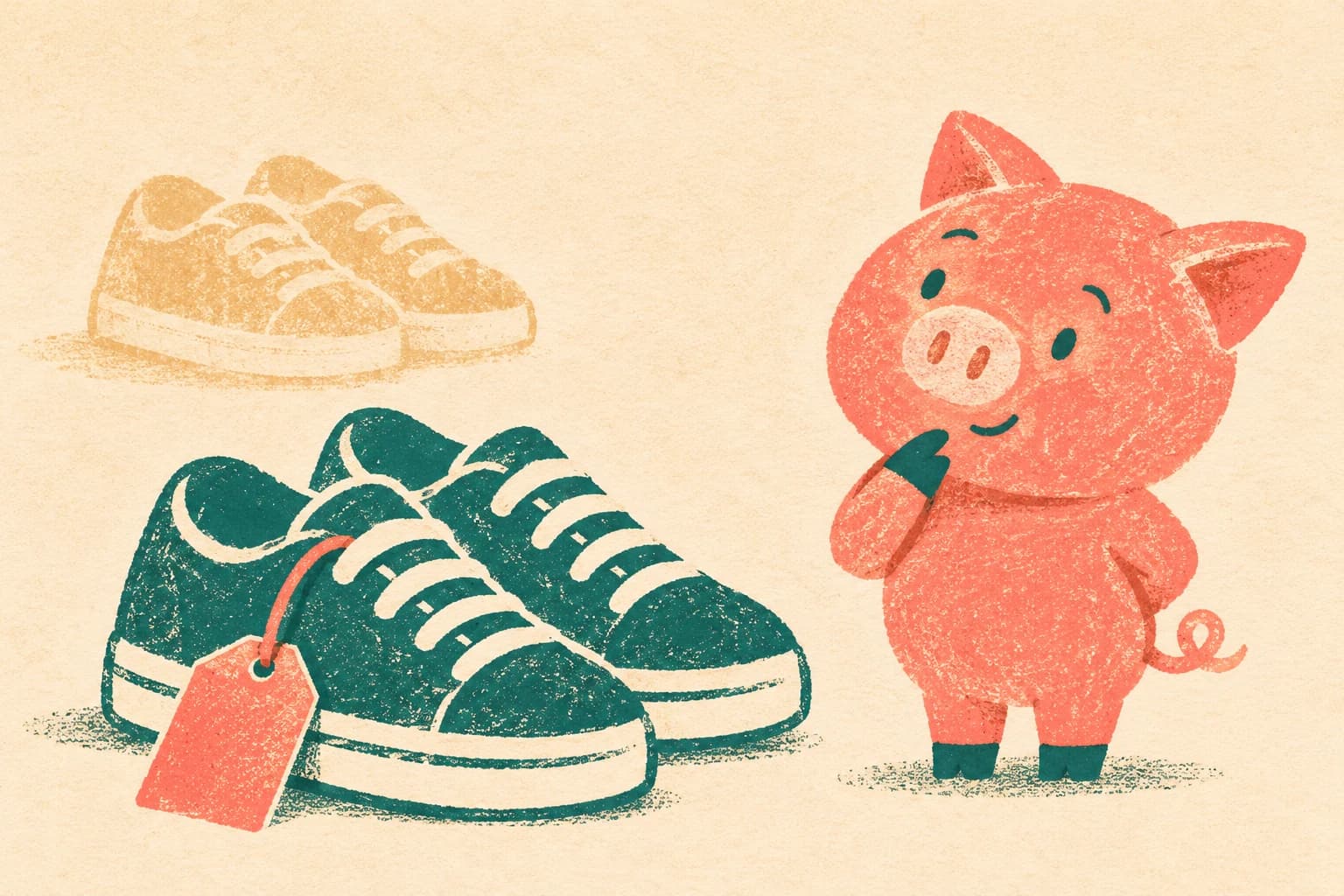
At this age you can add comparison. The same item can have different prices, while two items at the same price may last differently. Look together at quality, size, and whether your child will really use it. Don’t turn every purchase into a hunt for the lowest price.
In one example, the goal costs 1,200 lek and 400 lek has been saved. Saving 200 lek a week means four more weeks. If your child spends 200 lek of the savings, it takes five. Write down both options and let them choose. The question is “Which path do you prefer?”, not “Why did you waste it?” The CFPB (the US Consumer Financial Protection Bureau) encourages adults to talk through their everyday money choices out loud. A sentence like “I’m waiting so I can compare two offers” makes visible a process your child wouldn’t otherwise see.
Ages 11-14: more control, plus a backup plan
Start with a weekly budget that covers one or two personal wants. Move to every two weeks, then monthly, only when that helps your child. A longer period isn’t automatically a better lesson. Write down what the family pays for and what your child decides on their own.
For a bigger purchase, ask for three pieces of information: the full price, how much they already have, and a realistic saving pace. Delivery, accessories, or upkeep may change the plan. If your child doesn’t get money regularly, set a goal without a fixed deadline.
The CFPB’s framework distinguishes knowledge, habits, and decision-making skills. It’s a reminder not to confuse knowing a word with having a habit. Your child may be able to explain a budget and still need help during the week.
The Sunday check-in: five minutes is enough to start
Sit down together when no one is in a hurry. Open the box or the notes, see what changed, and decide on the next step. Don’t demand an account of every coin in an interrogating tone. The goal is for your child to keep coming to the check-in, even when the plan didn’t go well.
- What did you add this week, and what did you spend?
- Does the wish you chose still matter to you?
- What will you try differently next week?
- Do you need help counting, remembering, or choosing a smaller goal?
When saving gets stuck
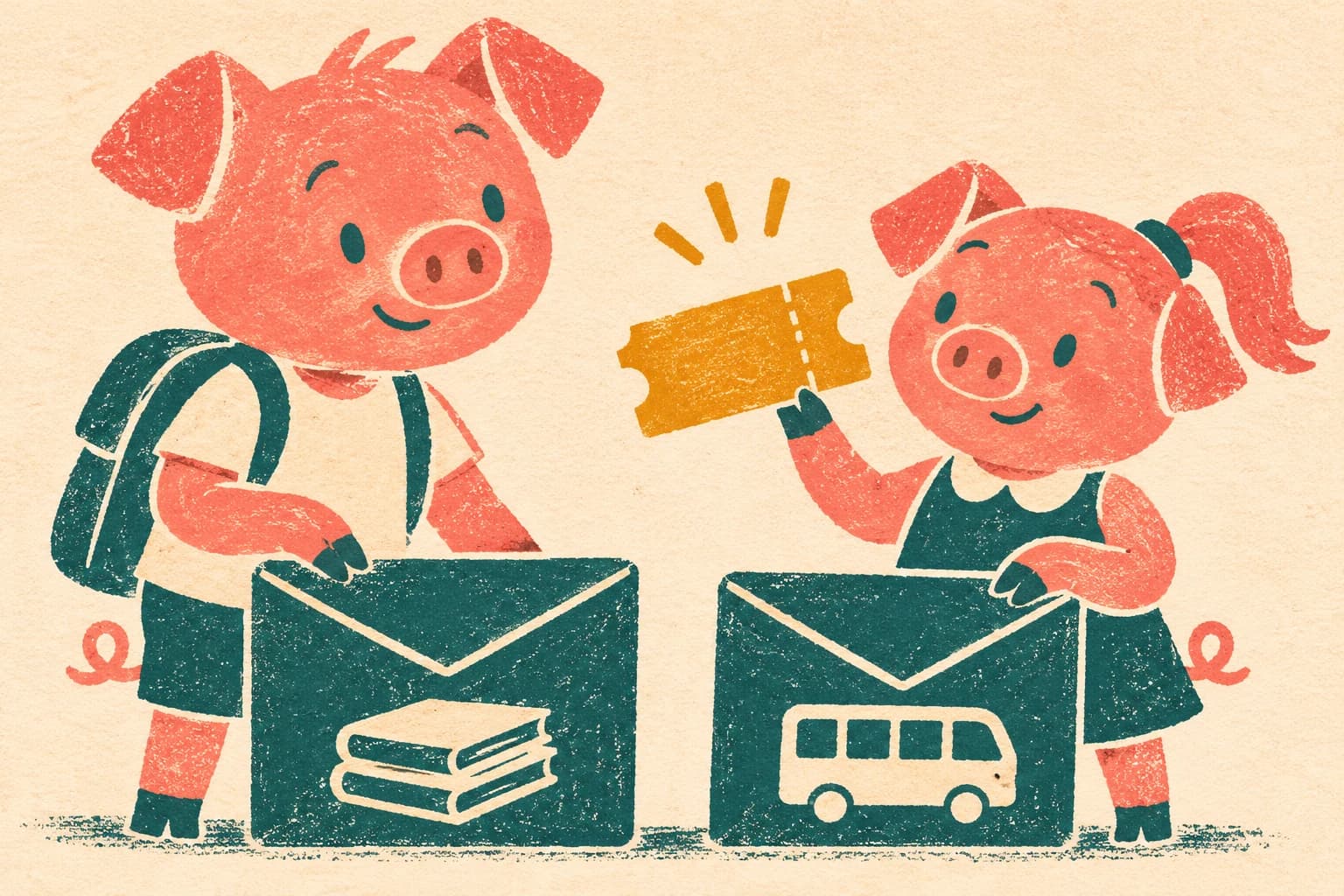
If the goal is too far away, break it into steps or consider a used alternative. If your child spent everything, redo the math together. Food, necessary transportation, and school supplies remain the adults’ responsibility, even when the wish budget runs out.
Don’t compare your child’s savings with those of siblings or friends. Financial means and support differ. Measure progress through actions: did they ask the price, did they wait, did they explain their choice? For activities in Albanian, the Bank of Albania, the country’s central bank, offers the teaching package “Derrkuci Çufo mëson të kursejë” (“Çufo the Piglet Learns to Save”) for grades 1–3. It’s a local starting point you can pair with conversations at home.
Common questions
Is 12 too late to start teaching a child to save money?
No. Start with a decision your child makes now, such as an outing with friends or a small purchase. Don’t treat them as if they should already know it all.
Should they save a fixed percentage?
Not necessarily. Start with a small amount that’s easy to understand and to keep up. Percentages help only if they make the plan clearer.
What if we can’t give allowance regularly?
You can compare prices, plan a free activity, or use play money. Learning doesn’t require a weekly allowance.