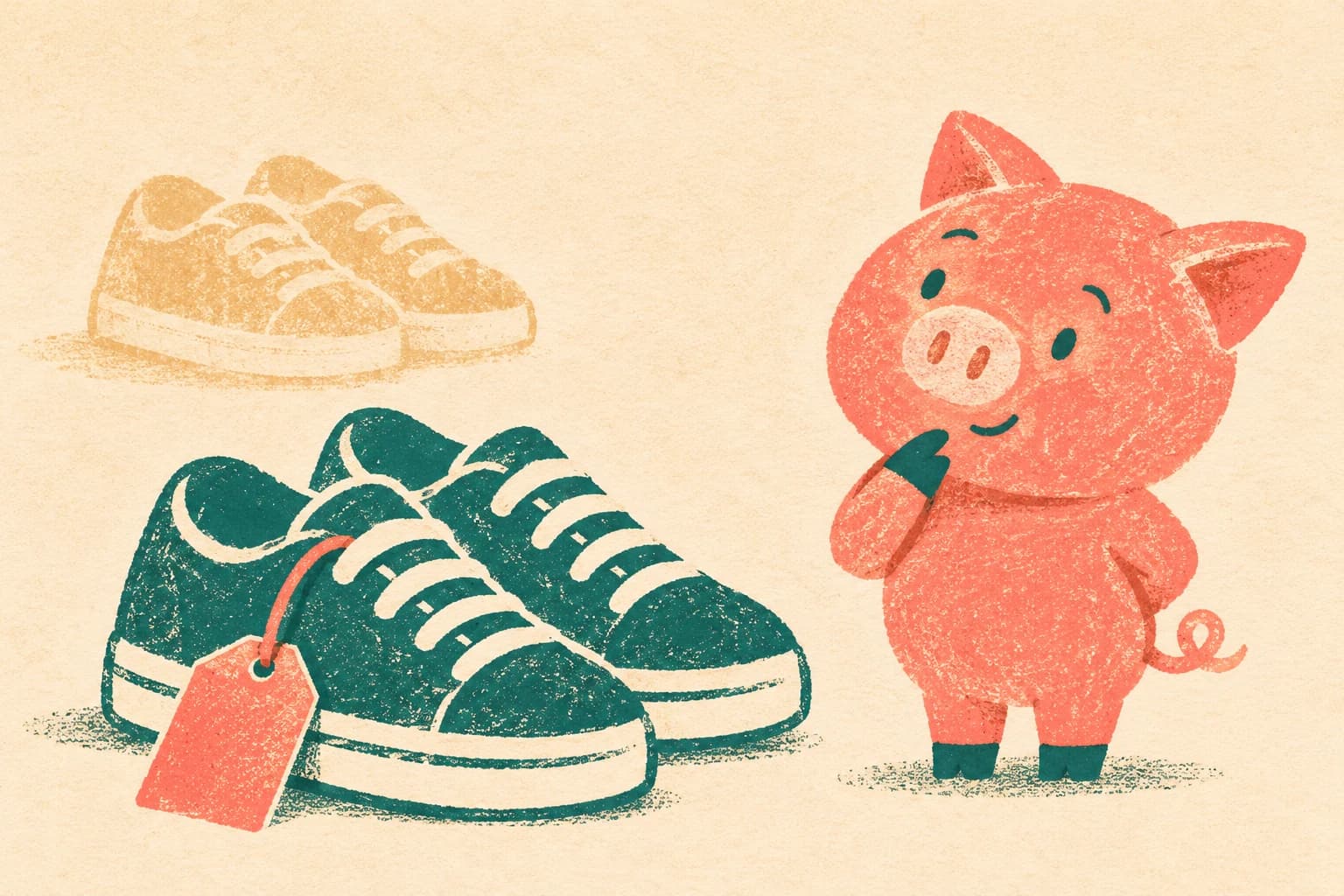
When your child wants something expensive because “everyone has one,” take peer pressure and the need to belong seriously, but keep them separate from the purchase decision. You can listen to your child’s feelings and still hold a money limit.
Listen for what’s behind the item
When your child says “everyone has one,” there may be peer pressure behind the request. Don’t start by proving that not everyone does. A more useful question is: “What would change for you if you had one too?” It might be about using the item, joining in a game, or the fear of being teased.
The American Academy of Child and Adolescent Psychiatry (AACAP) describes peer influence as an important part of growing up. Friends can be a source of support, but the wish to fit in can also create peer pressure. That doesn’t mean every request for a brand is a problem; it means the reason is worth hearing.
One possible answer: “I understand you want to feel part of the group. Let’s look at what you need and what we can pay for.” You’re not promising to buy it. You’re separating two conversations that often get mixed up: feelings and the budget.
When your child wants expensive things: separate function from brand
Take a sheet of paper and make two columns in everyday words: “What does it need to do?” and “What do I like about this particular one?” For sneakers, the first column might list fit, comfort, and use for sports. The second might list color, design, and brand.
In a made-up example, the family can cover 3,000 lek for suitable sneakers, while the pair your child wants costs 5,000. The difference is 2,000 lek. That doesn’t automatically become the amount your child has to save. First, check whether the expensive pair is safe, suitable, and a choice your family is comfortable with.
Then you can talk about an alternative, waiting for another occasion, or your child using some savings for the extra cost, if that fits your agreement. The basic need for proper shoes should never depend on your child’s ability to save. The amounts in this exercise are not market prices or recommended limits.
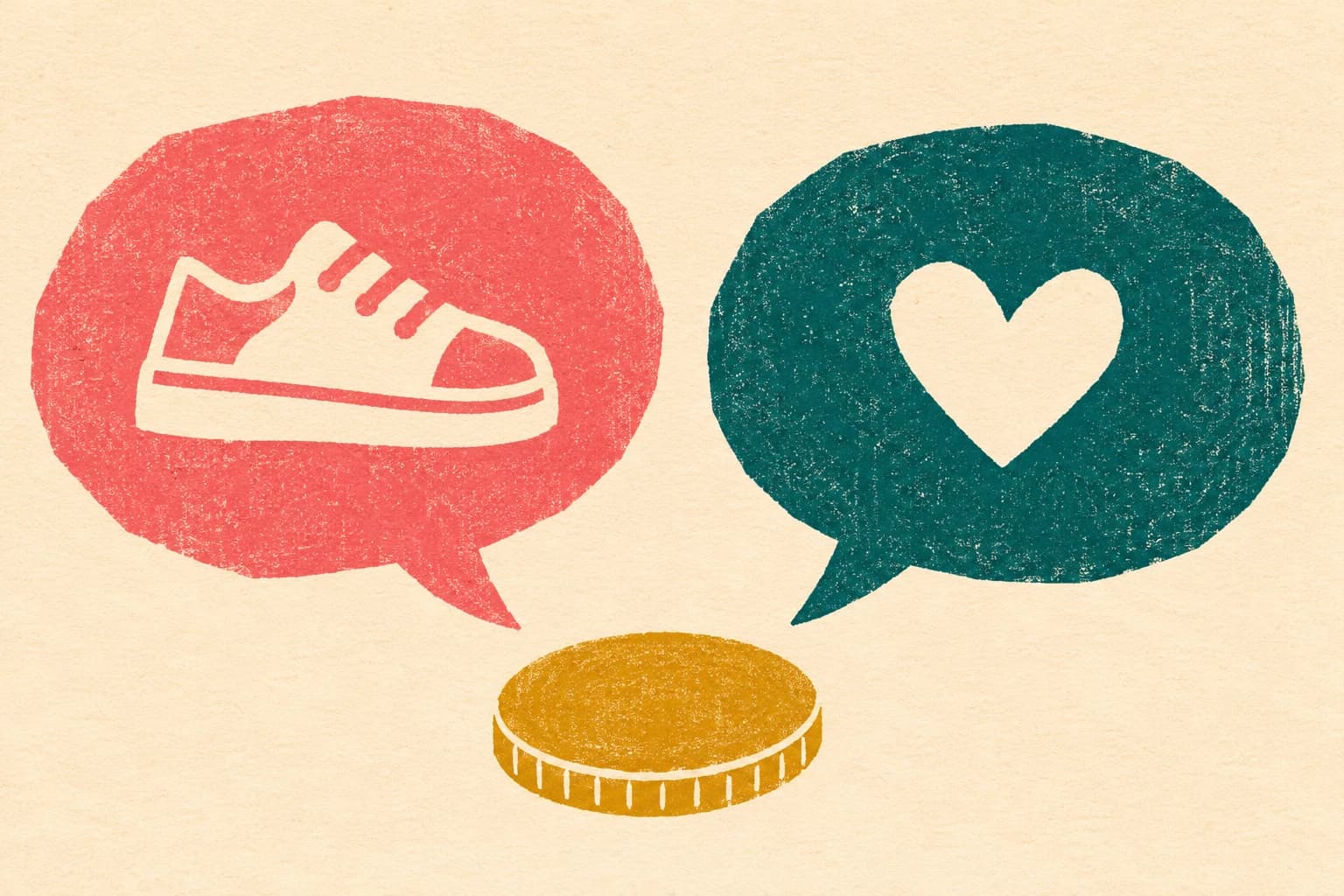
Give them words they can actually use
A long talk at home can be forgotten the moment a friend asks a question on the playground. Practice two short replies: “I’m sticking with these for now” or “I’m saving for something else.” Your child doesn’t owe anyone details about the family’s income or difficulties.
Make it a role-play, not a test. One person asks the question, the other answers, then you switch. Look for a sentence that sounds like your child. If the parent’s wording feels awkward to them, let them change it.
Avoid moral comparisons like “We’re better than people who buy brands.” That just swaps one kind of judgment for another. Families can have different budgets and priorities without children having to defend them in every conversation.
Set the limit before the moment of purchase
A limit stated clearly at home is easier to understand than an argument in front of the salesperson. Say what the budget includes and which parts aren’t up for negotiation. With a phone, for example, the decision may also depend on age and use, not just price.
The US Consumer Financial Protection Bureau (CFPB) suggests adapting money conversations to a child’s development and having them at a moment when they can be useful. In practice, that means not turning a heated moment into a finance lecture. Listen now; look at alternatives when everyone is calmer.
You can set a date to revisit the request. A “we’ll look at it on Saturday” that you actually keep is clearer than a “maybe” that drags on forever. At that point, check whether the wish is still there and whether any real alternatives have come up.
When it’s no longer just comparison
If your child says they’re repeatedly teased, left out, or asked for money to be accepted into the group, don’t treat it as a brand problem. Ask what exactly is happening and, when needed, involve the teacher or the right person at school. Buying the item is not a reliable fix for other people’s behavior.
Also keep in mind that your child may genuinely like the item. A child can love a design and feel pressure at the same time. You don’t need to settle on a single explanation in order to listen and set a limit.
The conversation has gone well when your child can say what they want, understands what the family covers, and has a way to answer friends’ questions. They don’t have to stop wanting nice things in order to learn how to make decisions about them.
Common questions
Should we buy it so they don’t feel different?
There’s no single answer for every purchase. Listen to the reason, and check the need and the budget. If there’s repeated exclusion or teasing, address that behavior together with the school.
Can my child pay the difference from their savings?
It can be an option for an extra they want, if it suits their age and your agreement. Basic needs remain the adult’s responsibility.
What if my child says the family is poor?
Ask what made them say it. Explain that a limit on one purchase doesn’t describe the family’s whole situation, and that a person’s worth isn’t measured by what they own.