To teach needs vs. wants at the grocery store, set the limit before you shop, acknowledge your child’s wish, and offer a small choice within the plan. If your child gets upset, skip the lecture in the checkout line; talk about money once they’ve calmed down.
Have the conversation before the toy aisle
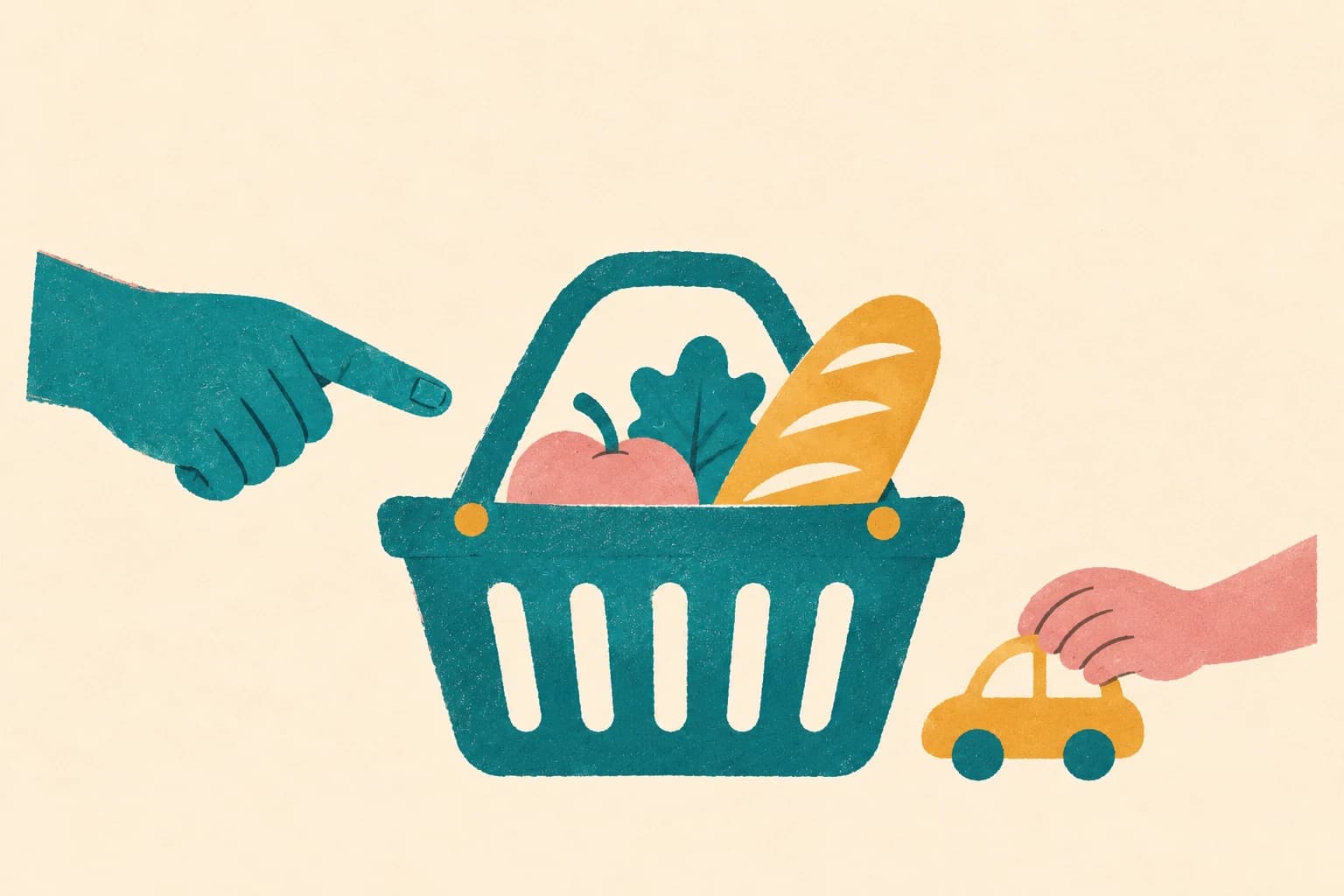
Once your child is holding the toy, it’s too late to explain the shopping rules, or the difference between needs and wants, for the first time. Before you go in, say why you’re there: “Today we’re buying the food on our list. You get to pick the apples.” If you’ve left room for a small treat, name the limit too.
Don’t say “maybe” when you already know the answer is no. Clear expectations won’t make feelings disappear, but they leave your child less to guess about. If your child is tired or hungry, keep the trip short when you can. It’s not the moment for a long price-comparison exercise.
Needs vs. wants: wants still belong in the conversation
A need is something we require for daily life, health, school, or getting through the day in our circumstances. A want is something we enjoy and can plan for once our needs are covered. Teaching materials from the CFPB (the US Consumer Financial Protection Bureau) use this distinction to practice budgeting.
Still, avoid sorting things into “good” and “bad.” A jacket may be a need; a second one, just because it has a favorite character on it, may be a want. A phone may serve an essential purpose in one family and not be essential in another.
A helpful question is: “What do we need this for today?” If your child answers, “Because I like it,” accept that. Liking something is perfectly understandable. Then you can talk about where that wish fits in the plan.
Give your child a small, real role
Give your child two or three items to find, with pictures if they can’t read yet. For younger children, finding the product is enough. With older ones, add a comparison: two packs of the same product, looking at the price and quantity of each.
Try this with invented numbers: a 500-gram pack costs 200 lek, while a 1-kilogram pack costs 360 lek. Two small packs would cost 400 lek. The large pack costs less for the same amount, but it’s only worth it if you’ll use it and can afford it. A deal isn’t a saving if the food ends up in the trash.
You don’t need to do this in every aisle. One comparison your child really understands is worth more than ten questions that tire them out and slow you down.
What to say when they ask for something not on the list
Try a three-part answer: acknowledge the wish, restate the limit, and name the next step. For example: “I can see you really like that car. It’s not in our plan today. We can add it to your wish list and look at it again at home.”
If you’ve set aside a small amount for a treat, offer two options within it. Don’t restart the discussion for every product. If your child cries, stay close and slow the conversation down. The money explanation can wait until they’ve calmed down.
Avoid lines like “You’re embarrassing me” or “Good children don’t ask for things.” You’re teaching a skill to a child who may be disappointed. You’re not proving to other shoppers how well your family behaves.
Waiting as an experiment, not a punishment
For a want that isn’t urgent, agree on a pause until tomorrow or until your weekly money chat. Write down the item and its price. If the wish lasts, it can become a savings goal. If it’s forgotten, your child has learned something about impulses without being criticized.
There’s no need to turn a set number of hours into a scientific rule; the waiting period is a family tool, and you choose it. For young children, use a concrete marker like “tomorrow after breakfast” instead of an abstract deadline. You can model the same pause yourself: “I like it, but I want to see whether I really need it. I’ll leave it here today.” Your child sees that adults stop and think before buying, too.
After shopping, revisit just one moment
At home, pick one good decision your child made: “You noticed the packs had different amounts.” Or: “You were upset, but we kept the toy on your wish list.” Praise the specific action, not silent obedience.
If the trip went badly, skip the long analysis. Change one thing for next time: fewer items, a picture list, a clearer limit, or a different time of day. Every family has tiring days. These skills are built through many small moments, not one perfect supermarket trip.
Common questions
Is it wrong to buy a treat?
No. Small wants can have a place in the budget. The point is for your child to understand the choice and the limit, not to see every pleasure as a bad purchase.
What about products on sale?
Check whether you need it, how much it contains, and whether you’ll actually use it. A lower price doesn’t automatically make a purchase necessary.
What do we do when we can’t afford a want?
Say it clearly and calmly: “This time we need the money for groceries.” Children don’t need to carry adults’ financial worries.