Teaching kids about advertising starts with three questions: who made this message, what does it want us to do, and what isn’t it telling us? Kids can like an influencer and still ask who benefits; recognizing an ad is only the start, not complete protection.
When influencer ads look like part of the video
Your child is watching a fun video, and a person they like shows off a product. For kids, ads don’t always come with an obvious break like on TV: the product may be part of the story, the game, or an unboxing. So when teaching kids about advertising, instead of starting with “don’t believe anything,” ask: “Is this person showing us something they like, or do they also have a deal with the brand?” Sometimes both are true. An ad doesn’t automatically mean the product is bad; it means there’s a commercial interest worth understanding.
The US Federal Trade Commission (FTC) has looked at the problems that arise when advertising blends with entertainment and warns that disclosures may not be enough, especially for young children. This source helps explain the issue; it does not describe Albanian law.
Three questions before you tap “Buy”
First: “Who made this message?” Check whether it comes from the brand itself, a creator, or an account that reposted it. Second: “What does it want us to do?” Maybe buy something, click a link, or use a code. Third: “What isn’t it telling us?” The full price, shipping costs, size, limits on the offer, or a simpler alternative may be missing. Pick just one video to talk about; there’s no need to analyze everything your child watches.
If you see labels like “ad,” “sponsored,” or “paid partnership” (or the Albanian “reklamë” and “sponsorizuar”), explain them in plain language: the person has a business relationship with what they’re showing. A missing label doesn’t prove, on its own, that nobody was paid.
What research tells us, and what it doesn’t
A study by Boerman and van Reijmersdal with children aged 8–12 looked at the effect of a sponsorship disclosure in a video. Children recognized the advertising better when they correctly remembered the disclosure. That doesn’t mean a label makes every child immune to persuasion.
The practical takeaway for home is modest: watch the message together and make sure your child actually noticed and understood the label, rather than assuming they read it. The study wasn’t done for Pigi and doesn’t test our activity.
Even after recognizing an ad, a child may still want the product. That’s why the conversation continues with price, usefulness, and budget, not just “Is this an ad?”
An activity with a made-up product
Draw a pencil case and write two descriptions. The first: “Holds six pencils and closes with a zipper.” The second: “Everyone will want one. Get yours today!” Ask your child to tell apart the information that can be checked from the sentence that’s trying to create desire.
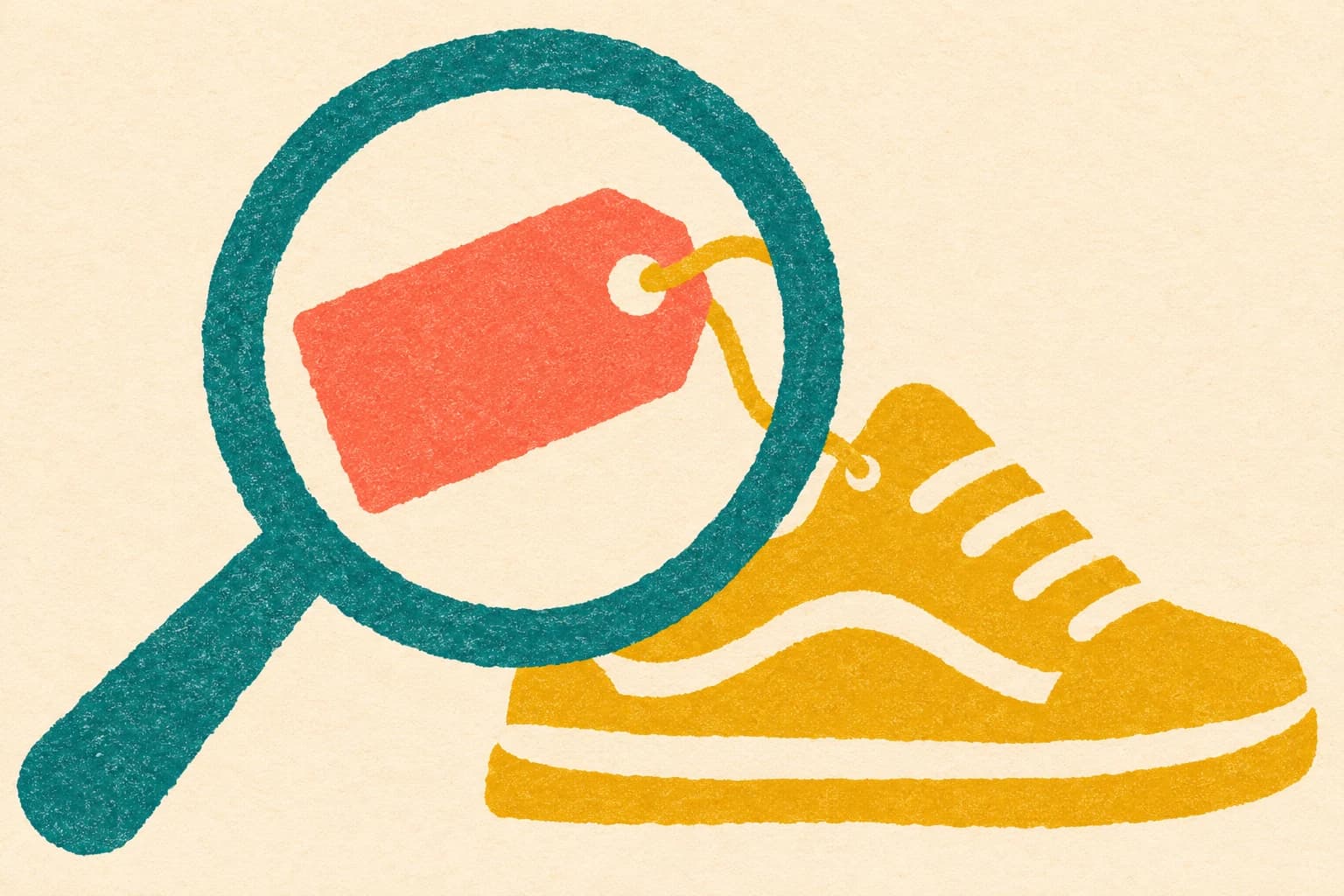
Then give it a made-up price of 600 lek and compare it with an alternative at 400 lek. What real difference would justify paying 200 lek more? It might be quality or a feature they actually need, not just who recommends it.
Let your child make a short ad for an everyday item, too. Then ask what they chose to show and what they left out. Keep it a game, not a graded test.
When friends and the screen push the same purchase
If the wish is tied to a group of friends, first listen to what the item means to your child. An explanation about price may not address the fear of being left out. Then go back to your family’s agreement: write it down, check the full price, and decide after a break.
There’s no need to attack a favorite creator or make fun of your child’s tastes. One helpful line is: “We can enjoy the video without buying what’s in it.” It leaves your child room to keep their interest while practicing the money decision separately.
Common questions
Is every influencer recommendation an ad?
Not necessarily. Look for disclosures and business ties, but don’t make accusations without evidence. Whatever the source, check the product and the price.
Is an “ad” label enough?
Not always. Your child has to notice it and understand it, and recognizing an ad doesn’t automatically cancel its influence.