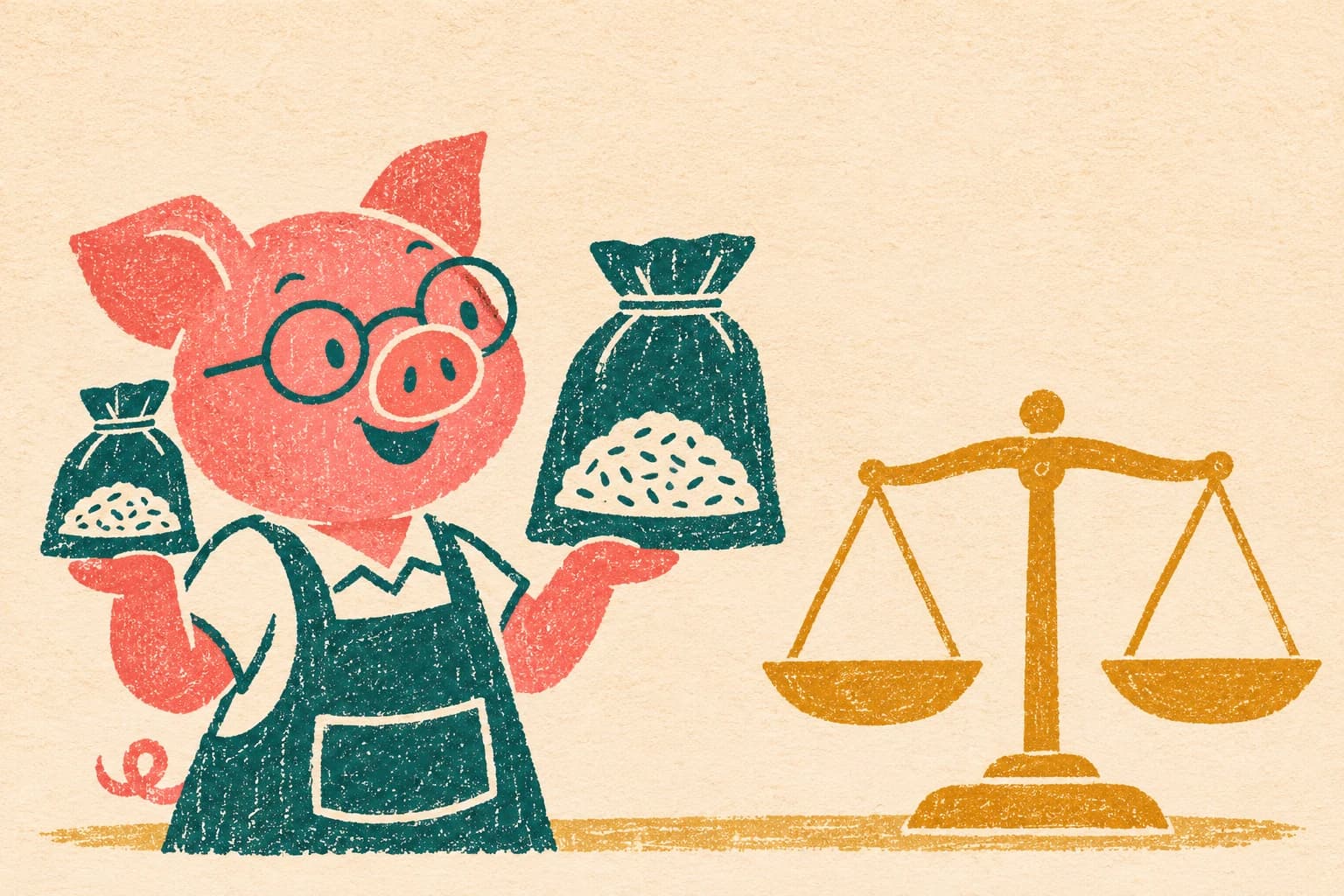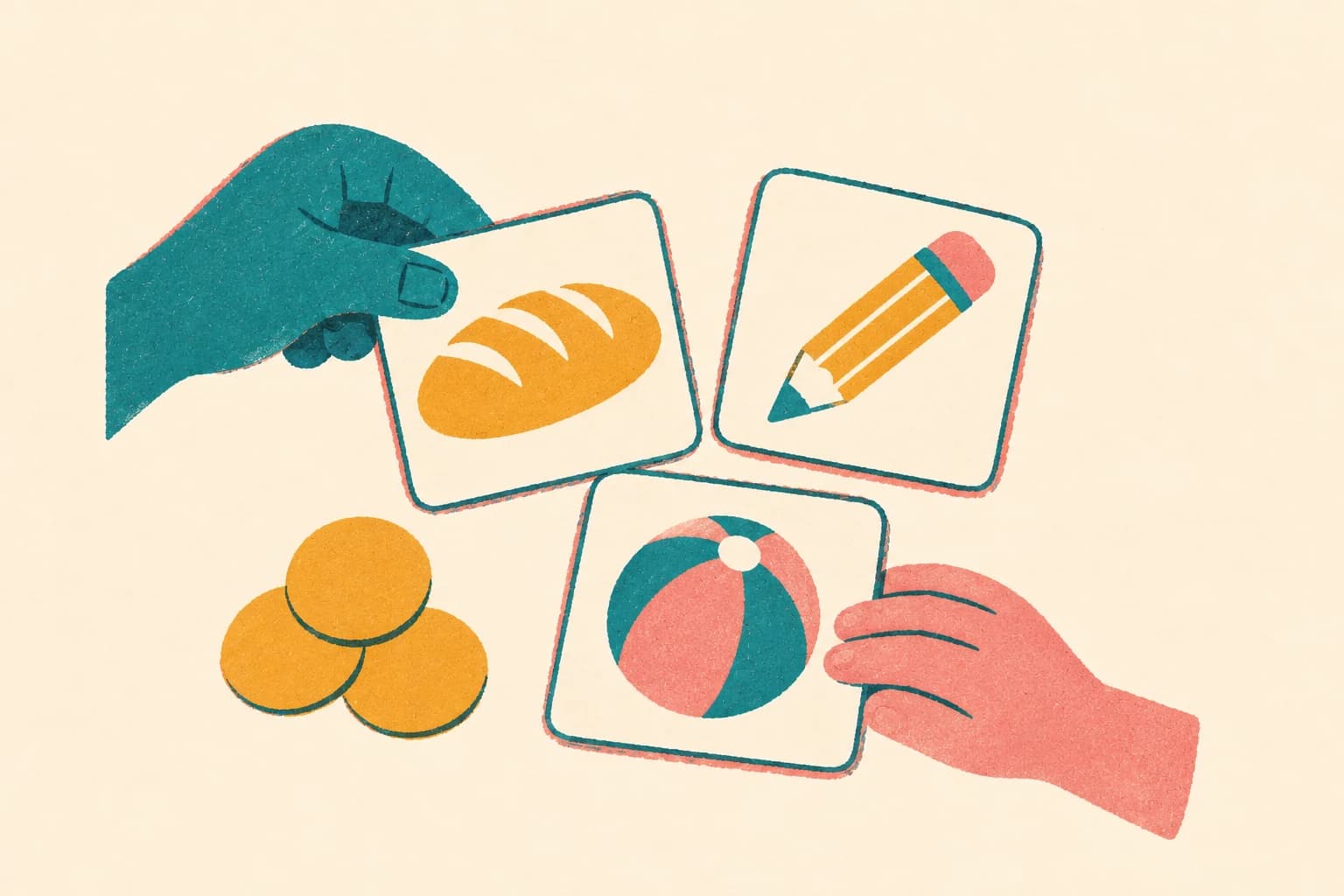
A classroom economy is a simulation in which students receive, record, save, and spend play money (here, Pigi Oinks) for class roles. Give everyone equal opportunities, keep grades and basic needs out of the game, and assess financial reasoning, not who collects the most.
What is a classroom economy system?
A classroom economy gives students a chance to practice receiving, recording, saving, and using a limited resource. With paper Oinks, mistakes can be discussed without losing real money. You can link the activity to arithmetic and to explaining decisions.
This is a proposed model for a four-week trial. It does not guarantee better behavior, and it is not a banking system. In this exercise, Oinks have no exchange rate with the lek, are not bought by families, and create no financial obligation outside the classroom.
What we can learn from research
An evaluation of the US program My Classroom Economy reported gains in financial knowledge and budgeting after a ten-week intervention in grades 3–5. It is a promising example of learning by doing, but it is not a study of Pigi, nor proof that it will work the same way in every Albanian classroom.
Use the research as a reason to try carefully, then watch what happens in your own classroom. Do students record more accurately? Do they explain why they saved or used their Oinks? Do they understand that the same amount can’t be spent twice? These questions tell you more than “Were they excited about the rewards?”
Week one: introduce the system without rushing
Give every student the same starting amount, for example 20 Oinks. Choose denominations the class can count easily. On the board, draw a ledger with four columns: date, money in, money out, and balance. Walk through an example: start with 20, receive 10, spend 5, and 25 are left.
Run a practice round in which mistakes are corrected together. If a student loses a paper note, rely on the ledger and a clear replacement procedure: the goal is not to punish a child for a system they are still learning. Keep envelopes labeled with a name or code in the classroom, never post balances as a public ranking, and let families know they don’t need to provide money or paid materials for their child to take part.
Clear roles and equal pay in the first trial
At first, use the same weekly reward for roles with a similar workload, for example 10 Oinks for completing the agreed role, with whatever support the student needs. This is a design choice for this trial, not a rate every teacher has to follow.
Rotate roles so everyone gets to try different responsibilities. In large classes, work in groups and rotate roles within each group. The teacher oversees the ledger; no student controls other students’ money alone.
- Library helper: makes sure the books in the reading corner are back in their places.
- Materials manager: hands out and collects activity sheets.
- Ledger helper: reads transactions aloud while another student and the teacher check them.
- Shared-space helper: helps put shared materials away after an activity.
Weeks two and three: choices students can explain
Offer two or three symbolic options that cost no real money, such as choosing a puzzle for the class or a story from an approved list. You might set prices of 10 and 30 Oinks, so there is both an option within reach and a reason to wait.
Never put breaks, water, bathroom trips, respect, the teacher’s help, or taking part in lessons up for sale. Don’t tie the system to grades, reading speed, or behaviors a child can’t easily control. These are the inclusion boundaries of our model.
When a student is absent, give them a reasonable way back into the activity. Avoid debt and fines in the first trial. If the class is spending more energy on arguments over tokens than on learning, reduce the number of transactions or pause the system.
The Friday ledger
Plan a short session, but allow more time in the first weeks. Ten minutes is an organizational target, not a promise. Assign roles, read through money in and money out, and check the balances. Then give students an example to solve on their own.
For a student who finds writing hard, accept symbols or spoken answers. For a student ready for more, ask for two spending plans with the same amount. Everyone works on the same concept without needing to answer in the same format.
Week four: wrap up with a new problem
Give an individual scenario: “You have 25 Oinks. One option costs 10 and another costs 30. What can you do today? What would need to change for you to get the second one?” Ask for both the calculation and the reason, and compare them with a similar task from week one.
Then ask students whether the system felt fair and easy to understand. Did everyone get a chance to take part? Did anyone feel left behind? Use their answers to improve the activity or to stop it. If you continue, add only one new element at a time.
That new element might be a shared class goal or a price that changes in an announced round. Keep the line between the game and real life clear: people have unequal opportunities and resources, and their worth is never measured by the amount they own.
Common questions
Should students pay “rent” for their desks?
Not in this model. A place in the classroom and basic learning materials are always guaranteed. Keep the simulation to symbolic choices, not to the conditions for taking part.
How do I run a classroom economy in a large class?
Start with fewer transactions, envelopes kept in the classroom, and roles shared within groups. The teacher keeps final control of the ledger.
Are Oinks a reward for grades?
Not in this activity. Assess students’ ability to calculate and explain their choices; Oinks are just game materials.