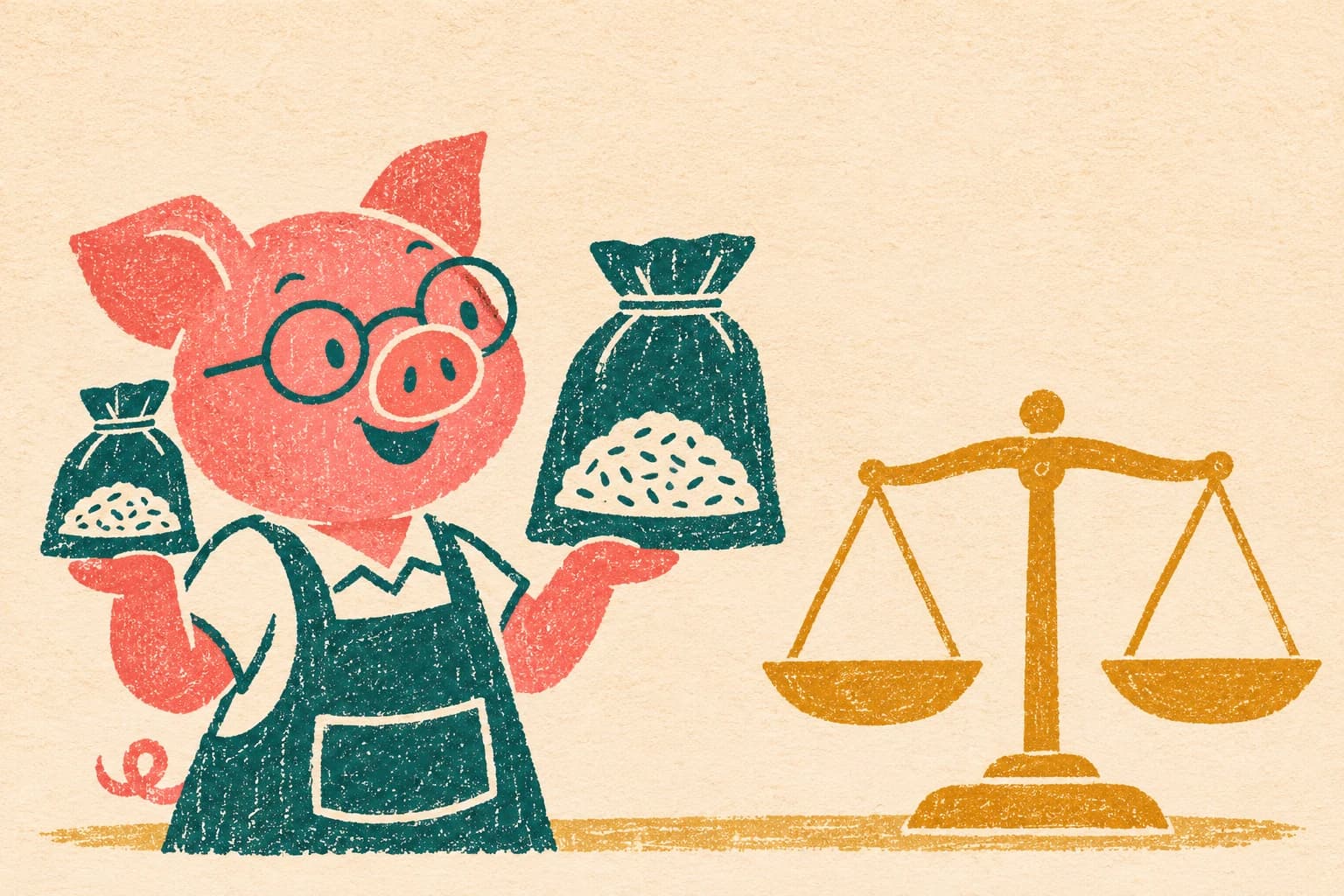
Unit price is the package price divided by the quantity, such as lek per kilogram, so packages of different sizes can be compared fairly. In this unit price lesson, students then check the quantity needed and the money available before choosing.
Connecting to the math students are learning
Two bags of rice have different prices and weights. Which one is the better deal? This question, the heart of a unit price lesson, connects division, units of measurement, and percentages to a situation students know. The updated grade 6 math curriculum from ASCAP, Albania’s agency for quality assurance in pre-university education, includes decimals, percentages, ratios, and real-life situations. The lesson below is a Pigi proposal that uses these skills, not an official plan approved by ASCAP.
You can use it in grades 6–8, depending on what students have already covered. Prepare worksheets with made-up offers, pencils, and calculators if needed. By the end of the lesson, students should be able to find the price per kilogram, calculate a simple discount, and justify their choice. No real products, family receipts, or store visits are needed. The figures in the exercises are in lek and don’t reflect current prices.
Minutes 0–15: from a guess to the unit price
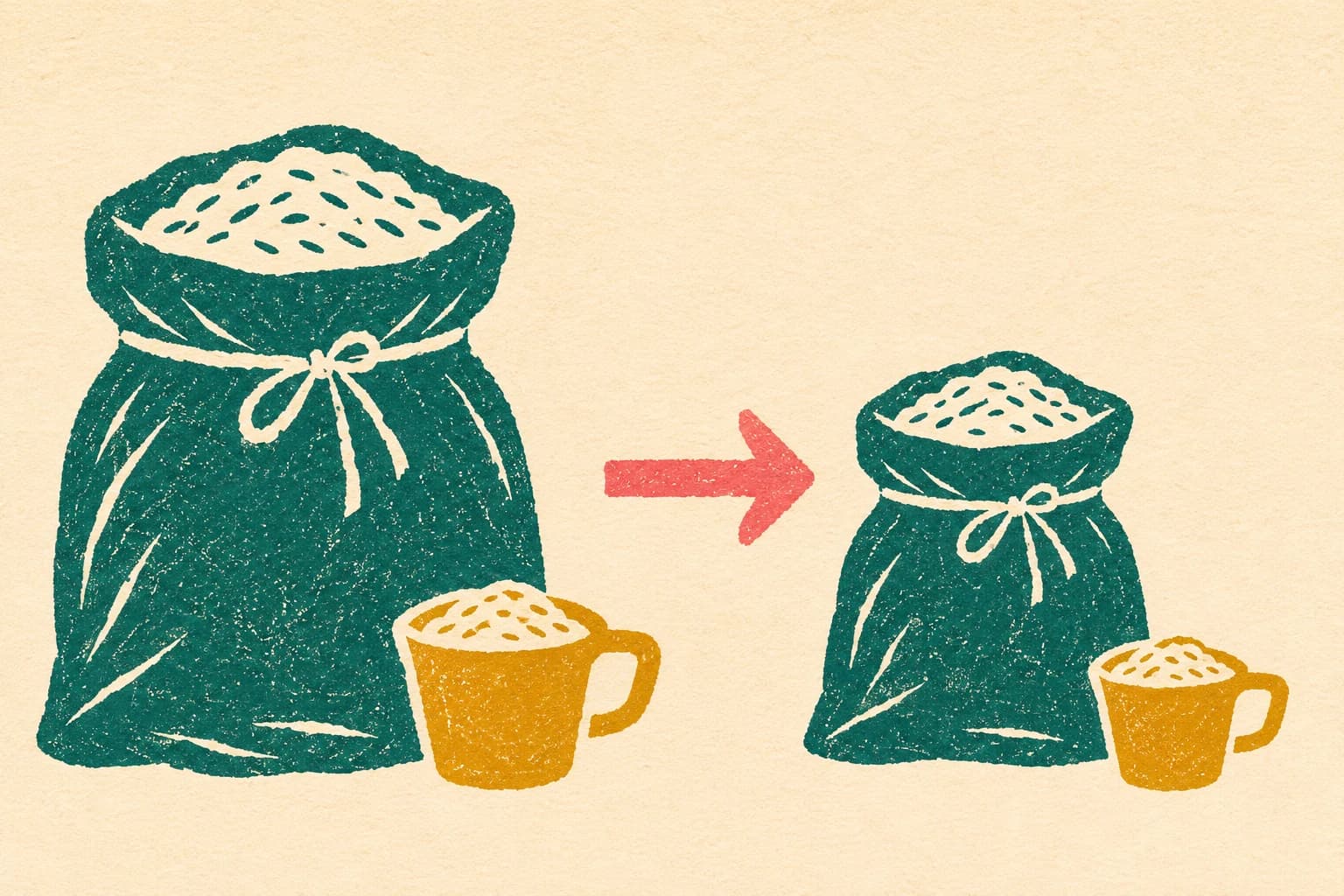
In the first five minutes, write on the board: package A, 500 grams for 90 lek; package B, 1 kilogram for 170 lek. Ask students for a prediction and their reason, without correcting them right away. Some will choose the 90 lek package because it’s the smaller amount. Point out the difference between “paying less today” and “paying less for the same amount.”
Over the next ten minutes, convert the quantities to the same unit. For A, two packages make one kilogram and cost 180 lek. B costs 170 lek per kilogram, so 10 lek less for the same amount. The formula is: package price divided by quantity in kilograms. The U.S. National Institute of Standards and Technology (NIST) explains unit pricing as a tool for comparing products of different sizes. Ask students to write the unit next to every answer, so the number doesn’t stand alone without meaning.
Minutes 15–25: pair work and solutions
Give two new offers: 750 grams for 150 lek and 1 kilogram for 190 lek. The first costs 150 ÷ 0.75 = 200 lek per kilogram; the second, 190 lek per kilogram. So the second has the lower unit price. One student calculates and the other checks the units, then they switch roles. If dividing by decimals is still hard, find the price for 250 grams (150 ÷ 3 = 50 lek) and multiply it by four.
Add a condition: the shopper has only 160 lek and needs 750 grams. The package that costs 190 lek is more than they have, even though it has the lower price per kilogram. Ask students for one sentence that holds both of these facts. This condition separates the calculation from the real decision and challenges the idea that the bigger package is always the better choice.
Minutes 25–35: calculate a percentage discount
A product costs 200 lek and is 15% off. The discount is 200 × 15 ÷ 100 = 30 lek. The new price is 200 − 30 = 170 lek. Ask students to label both results: “discount” and “price after discount.” The most common mistake in this exercise is presenting the 30 lek as the price you pay.
Now compare it with the same product priced at 165 lek with no sale label. The offer without a discount is 5 lek cheaper. For the group that’s moving faster, apply two discounts in a row to 200 lek: 10% and then another 10%. The price first becomes 180 lek and then 162 lek, not 160 lek. This extra exercise shows why percentages can’t simply be added when the base changes. For the other groups, one discount, clearly explained, is enough.
Minutes 35–45: reasoning and exit ticket
Take five minutes to discuss the quantity needed, how the product is stored, and whether the shopper can afford it. Even when the price per kilogram is lower, an amount that doesn’t get used may not be a good choice. Don’t ask students to say what their families can afford. Keep the scenarios imaginary and the same for everyone.
In the last five minutes, give two individual tasks. First: 500 grams for 80 lek or 1 kilogram for 150 lek? Solution: 160 lek versus 150 lek per kilogram, so the larger package has the lower unit price. Second: a product that costs 300 lek is 20% off; the final price is 240 lek. Assess the calculation, the unit, and one sentence of reasoning. If a student mixes up the units, go back to comparing equal quantities before moving on to harder percentages.
Common questions
Which grades is this unit price lesson for?
Grades 6–8, depending on what students have already learned. You can simplify the quantities or skip the exercise with two discounts in a row.
Is the package with the lowest unit price always the best choice?
No. It also has to fit the quantity needed, the storage options, and the money available. An accurate calculation supports the decision, but it doesn’t replace the context.
How can I spot a conceptual mistake?
Ask the student to label the result. If they confuse the package price with the price per kilogram, or the discount with the new price, go back to a concrete example.