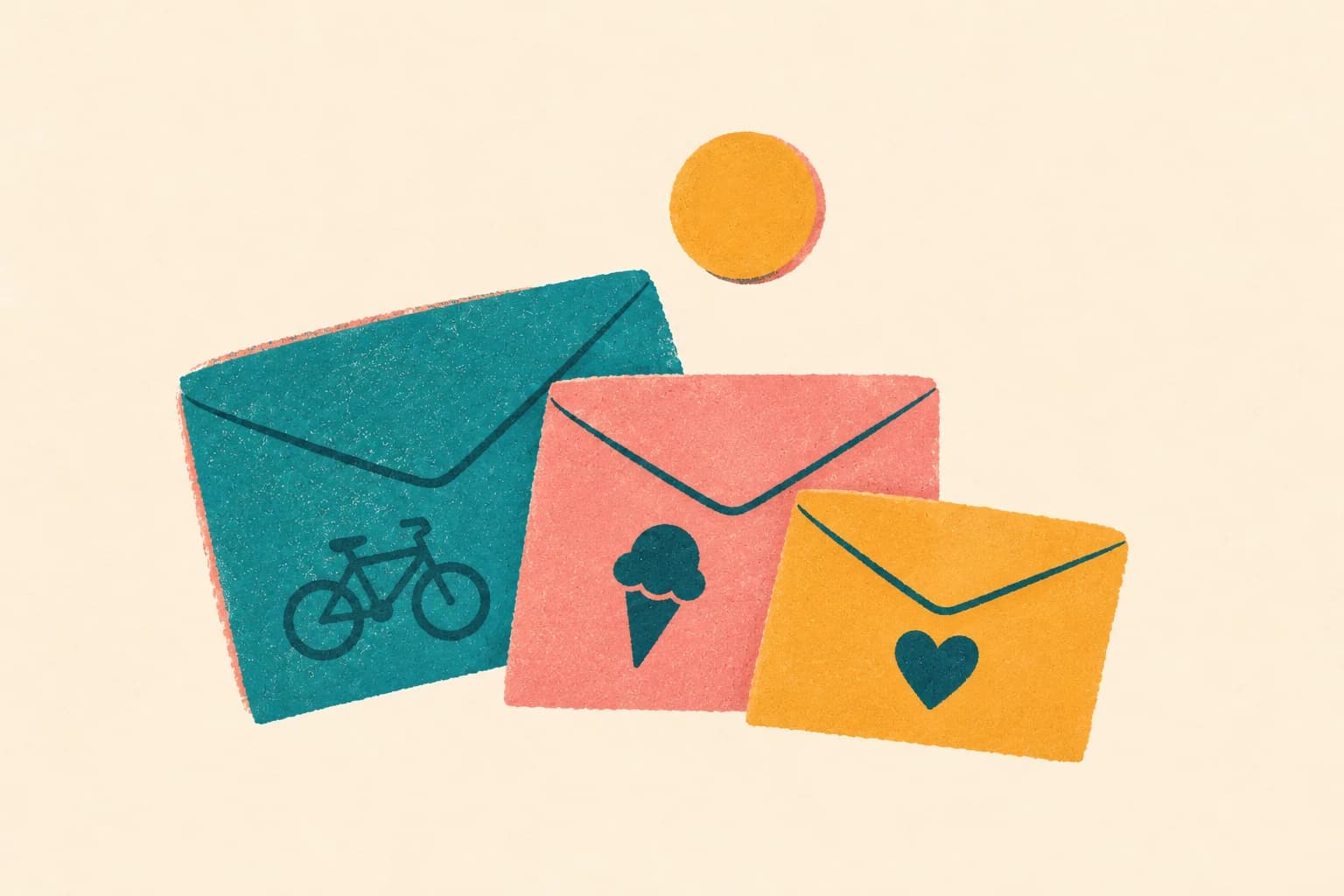
The 50/30/20 rule for kids is a simple way to split gift money: 50% for saving, 30% for fun, and 20% for sharing. It’s just one example to decide on together with your child, not an obligation.
Don’t start with “Give it to me, I’ll keep it safe”
After a celebration, your child may suddenly feel rich with gift money, and you may worry the money will be gone by the end of the day. Before you take it for safekeeping or bring up the 50/30/20 rule, count it together and explain where it will be kept. If you’re holding the money, your child should still know the amount and what you’ve agreed to do with it.
Have the conversation once the celebration is over. Start with a question: “What would you like to do with it?” The answer may tell you whether your child is thinking about a toy, an experience, or simply the thrill of buying something on their own.
What the 50/30/20 rule for kids means in this article
Our family exercise puts half toward a future goal, 30% toward something your child can enjoy now, and 20% toward sharing with someone else, if that fits your family’s values and choices. This is different from the well-known adult budgeting split of needs, wants, and savings.
There’s no reason every gift for every child has to follow these percentages. You can use two envelopes, split the money into round amounts, or keep most of it for one specific goal. If the giver had a particular purpose in mind, talk about it openly with your child. The CFPB (the U.S. Consumer Financial Protection Bureau) includes saving, spending, and sharing among the topics to discuss with children about money; the percentages and the activity below are our own practical adaptation, not the result of a study proving this formula.
A complete example with 2,000 lek
Say the gift is 2,000 lek. In our example, 1,000 lek is saved for a goal, 600 lek is kept for something to enjoy soon, and 400 lek goes to sharing. The total is still 2,000 lek. Write or draw each part so the money doesn’t seem to have “disappeared.”
With younger children, use ten identical slips of paper. Five go in the first envelope, three in the second, and two in the third. They don’t need to know percentages to understand that each part has a job.
If the gift is small and splitting it becomes tedious, keep it simple. Saving one coin and deciding what to do with the rest can be enough. A math exercise isn’t worth it if it takes all the joy out of the gift.
The savings goal should belong to your child, too
A label like “for the future” can feel very far away to a child. Ask what they’d like to achieve in the coming weeks or months. Look together at the real price, how much is still missing, and whether adults might chip in. Write down every contribution clearly so the numbers stay easy to follow.
Don’t change the goal without telling your child. If a parent is keeping the money for later, keep a record you can look at together. If you’re considering a savings account, check the conditions, how easily the money can be withdrawn, and the fees with the specific bank. The envelope exercise doesn’t require opening any financial product.
Sharing works better when it’s a choice
Your child might choose a small gift for someone, contribute to a trustworthy cause together with a parent, or give their time and help. Don’t compare them with a sibling or a friend, and don’t treat giving as proof that they’re a “good kid.”
If you choose an organization, check it yourself before sending any money. You can explain simply what your child’s contribution supports. If your family doesn’t want a separate giving envelope, a plan with just saving and spending is still worthwhile. A child doesn’t have to give away a fixed share to learn generosity.
Talking with grandparents without spoiling the fun
In a public discussion on the UK parenting forum Mumsnet, parents are split between saving gift money and using it to buy the child something. These experiences don’t set a rule; they show why the purpose of a gift is worth discussing among the adults.
When possible, agree on an approach among the adults before the holiday. You might say: “We’re learning to set aside some money for now and some for later. It would really help if you gave the money with your good wishes, without promising a specific purchase right away.”
If siblings receive very different amounts, don’t compare them out loud. Thank the givers and talk about each child’s plan separately. Your relationship with your relatives matters more than a perfectly balanced table of percentages.
Two weeks later, revisit the plan. Ask whether your child enjoyed the purchase and whether the longer-term goal still matters to them. That conversation teaches more than sticking perfectly to the original split.
Common questions
Does my child have to give away 20%?
No. In our example, it’s just one option. Your family decides the percentage, and whether to split the money at all, with your child involved.
What if my child wants to spend it all?
Listen to what they want to buy and look at the alternatives together. Set age-appropriate limits, but leave a portion where their choice truly counts.
What if the gift is in euros?
Note which currency the gift came in. If you exchange it, show your child how many lek you actually received and any fee charged, rather than guessing at an exchange rate.